
Upskilling
How to Upskill While Working Full-Time (A Practical Guide for Busy Filipinos)
By JC de las Alas, Founder and Lead Instructor
· 7 min read
The most common reason people give for not upskilling is not money. It is time. Between a full-time job, a commute that eats two hours, family, and the occasional need to sleep, where exactly is the free time to learn data analytics or AI? If you are an OFW, add a different time zone and homesickness to the mix.
Here is the honest truth: you do not need two free hours a day. You need a smarter plan. And the plan is not guesswork, it lines up with decades of learning-science research. This is how busy Filipinos actually finish a program instead of abandoning it in week two.
1. Trade "someday" for a tiny, fixed slot
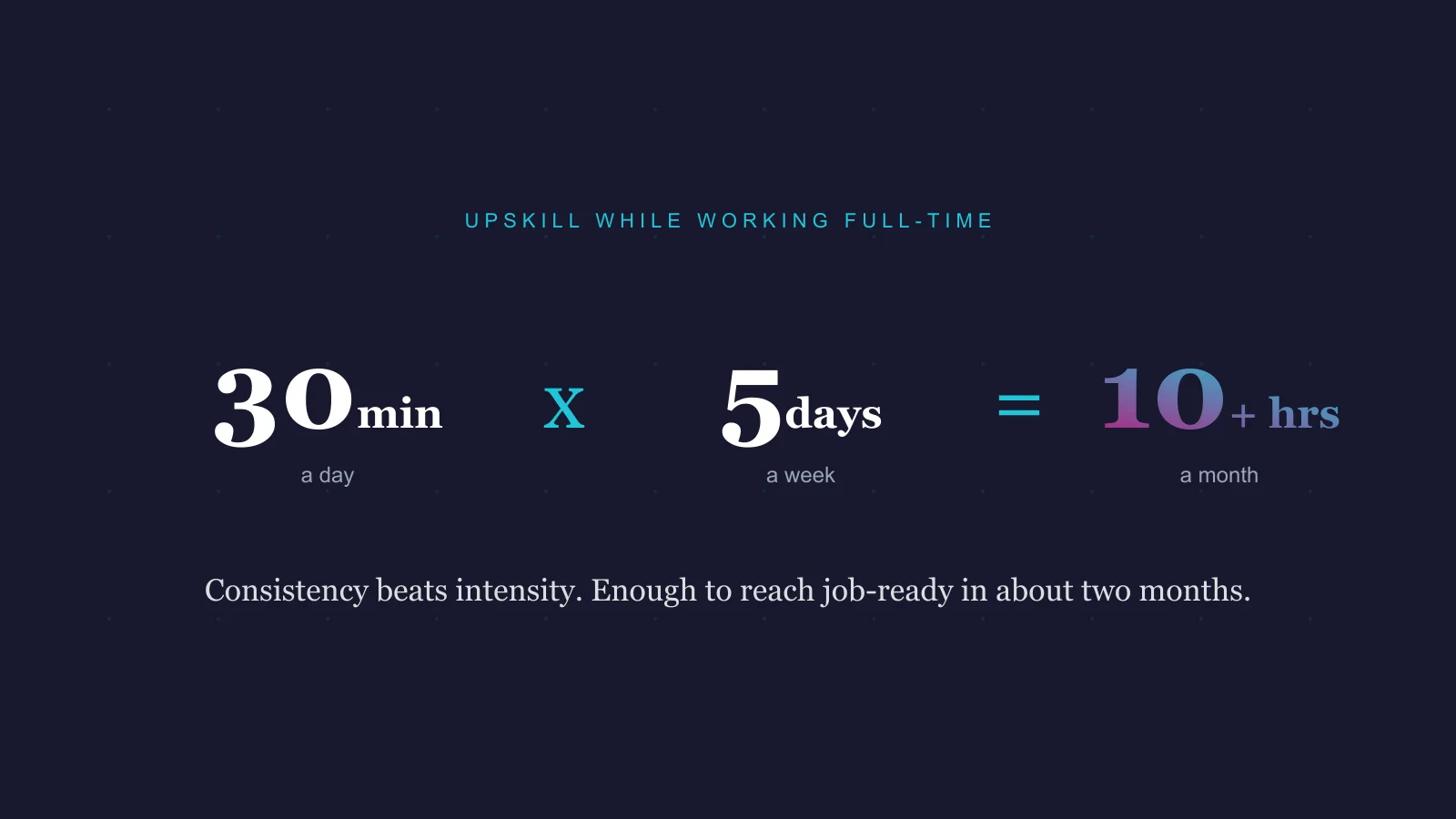
"I will study when I have time" means never, because that time never arrives. Instead, claim one small, fixed slot you can protect: 30 minutes before work, one lunch break, or the first hour after the kids sleep. Consistency beats intensity, and this is one of the most robust findings in cognitive science. Spacing your practice across many short sessions produces far more durable learning than the same hours crammed together, a result summarized in Nature Reviews Psychology. Thirty focused minutes a day, five days a week, is over ten hours a month, which is enough to genuinely learn a skill.
2. Choose learning that fits a phone and a commute
If a program needs a perfect desk and a two-hour block, it does not fit your life, and you will quit. Look for recorded replays you can watch on a jeepney or the MRT, lessons you can pause and resume, and a community you can ask a question in at 11 PM. Live sessions are valuable, but replays are what make a busy schedule survivable.
3. Learn one thing, applied to your actual job
The fastest learning is the kind you use the next day. If you work in a BPO, learn to build the report your team dreads making. If you run a small business, learn to automate your inventory or receipts. When new skills solve a real problem in front of you, they stick, and you get an instant return that keeps you motivated. This is retrieval practice in disguise: using what you learned, rather than rereading it, is what moves it into long-term memory. Not sure what to learn first? See the in-demand skills to learn in the Philippines.
4. Use AI as your always-available tutor
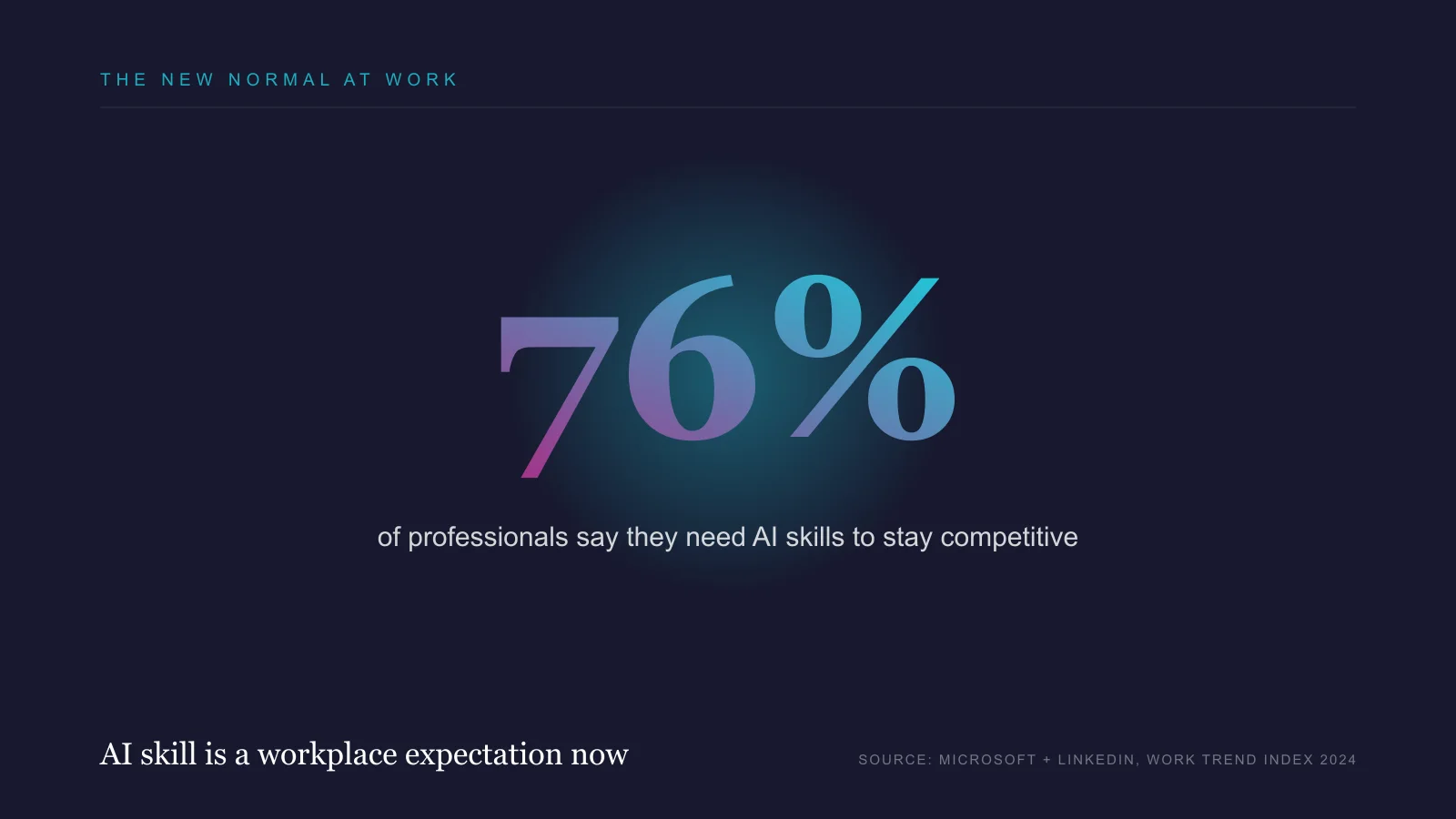
One quiet advantage of learning in 2026: you have a patient tutor available 24/7. Stuck on a formula at midnight with no one to ask? AI tools like ChatGPT and Claude can explain it, debug it, and give you a simpler example. Researchers have shown that a well-designed AI tutor can operationalize proven learning principles like spaced practice and active recall for time-constrained learners. And this is now a workplace expectation, not a bonus: in Microsoft and LinkedIn's 2024 Work Trend Index, 76 percent of professionals said they need AI skills to stay competitive. Learning to learn with AI is itself one of the most valuable skills you can build.
5. Make it social so you cannot quietly quit
It is easy to abandon a course no one knows you started. It is much harder to quit when a mentor checks in and a community celebrates your first dashboard. Tell one person your goal. Join a cohort or community. Accountability is not a nice-to-have for busy learners; it is the difference between finishing and not.
6. Protect your energy, not just your time
Burning out is the fastest way to quit. Do not study on empty. It is better to keep a small, sustainable habit for three months than to cram for two weekends and collapse. Rest is part of the plan, not a failure of it.
The techniques, in one video
If you want the science made practical, Ali Abdaal, a doctor turned educator with millions of subscribers, walks through the same evidence-based methods, active recall and spaced repetition, that the research above describes. It is aimed at students, but every technique works just as well for a working professional learning analytics at night.
A realistic weekly rhythm
Here is a schedule that works for a full-time worker: 30 minutes on weekday mornings for lessons, one 90-minute block on the weekend for a hands-on project, and the live session or replay whenever you can catch it. That is roughly five hours a week, and it is more than enough to go from beginner to job-ready over a couple of months.
We built the AI-Powered Data Analytics Career Bootcamp for exactly this reality: live sessions plus replays you can watch anytime, a community that answers when you are stuck, and projects tied to real work. To test whether it fits your schedule, start with the free class and see how one small slot feels.
- #Upskilling
- #Career Growth
- #OFW
- #Study Tips
Frequently asked questions
Protect one small, fixed daily slot instead of waiting for free time, choose a program with recorded replays you can watch on your commute, and apply each new skill to your actual job so it sticks. Thirty focused minutes a day, five days a week, is enough to genuinely learn a new skill.
Recorded replays and a community that answers across time zones make it possible to learn on your own schedule. Focus on remote-friendly, in-demand skills like data analytics, AI tools, and automation, which can turn into work-from-home income back home or abroad.
About five focused hours a week, spread across short daily sessions and one longer weekend block, is enough for most beginners to reach a job-ready level in a couple of months. Consistency matters far more than long, occasional cram sessions.
Make it social and applied. Tell someone your goal, join a cohort or community for accountability, and use each skill on a real problem at work so you see an immediate payoff. Programs with mentors and live support have far higher completion rates than solo video libraries.