Upskilling
Best Online Course Platform in the Philippines: How to Actually Choose
By JC de las Alas, Founder and Lead Instructor
· 7 min read
Type "best online course platform in the Philippines" into Google and you get a dozen listicles that rank the same names in a slightly different order. Here is the more useful answer: there is no single best platform, only the best one for your goal, your budget, and where you are starting from. A nurse shifting to tech, a fresh graduate with no portfolio, and a sari-sari store owner learning to automate their inventory all need very different things.
So instead of another ranking, here is how to actually choose, using seven questions that separate a platform that changes your career from one that just sells you a certificate and disappears.
1. Does it end in real outputs, not just finished videos?
Watching 40 hours of lectures feels productive, but employers and clients do not hire watch time. They hire proof. Before you enroll, ask one question: at the end of this, what will I have built? A good platform leaves you with a cleaned dataset, a working dashboard, an automation, or a portfolio you can screenshot into a job application. If the only output is a certificate, you learned about the skill without ever practicing it.
2. Is it built for beginners, or does it quietly assume you already know?
Many courses are written by experts who forgot what it is like to not know. Two minutes in, they say "just spin up an environment" and you are already lost. A beginner-aware platform starts from computer literate, not computer science. It explains the why before the how, uses examples from Filipino workplaces, and never makes you feel behind for asking a basic question. If a free preview lesson leaves you more confused than before, keep looking.
3. When you get stuck, can a real person help you?
You will get stuck. Everyone does. The difference between finishing and quietly giving up is whether help is one message away. Self-paced video libraries are cheap for a reason: there is no one on the other side. Live sessions, an active community, or mentors who answer questions are worth paying a little more for, because they are the reason people actually complete a program instead of abandoning it at 30 percent.
4. Does the price make sense for the outcome?
Cheap is not the same as good value, and expensive is not the same as effective. The real question is cost versus outcome. A course that teaches you nothing usable is expensive at any price. A one-time payment that ends in a job-ready portfolio, with lifetime access to replays, can be the best money you spend this year. Watch for two traps: subscriptions that keep billing long after you stopped logging in, and "free" courses that teach just enough to sell you the real thing.
5. Is there proof that graduates actually get results?
Ratings are easy to fake and easy to cherry-pick, so look past the stars. Are there real names, real screenshots, real outcomes? Did graduates move into actual roles, or just leave a nice review? One believable story of a specific person who got hired is worth more than a hundred anonymous five-star ratings.
6. Are the skills actually in demand here, right now?
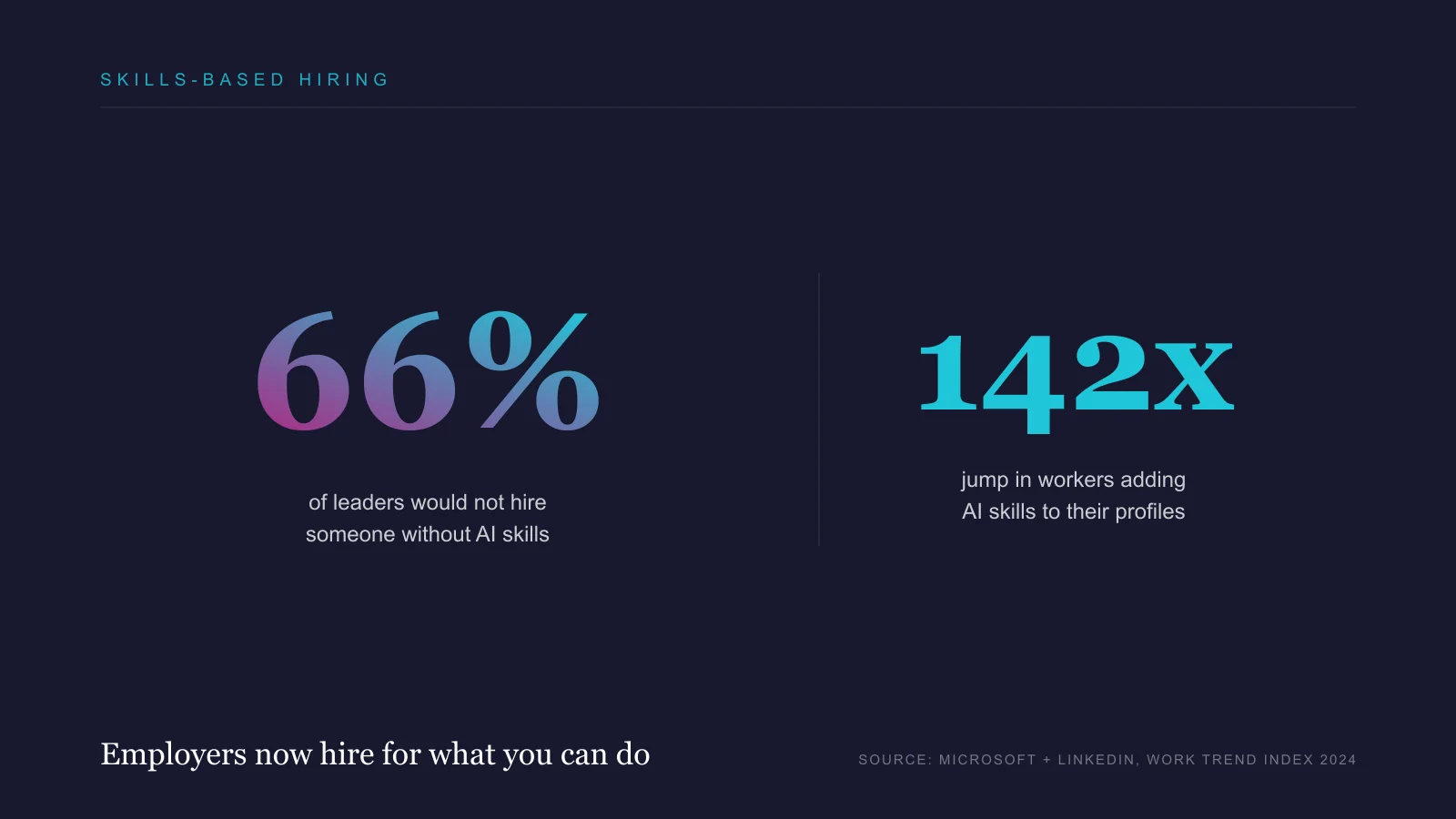
Some platforms teach yesterday's skills beautifully. The Philippine market rewards a specific mix: AI tools you can use at work, data analytics with Excel, SQL, Power BI, and Tableau, automation, and the ability to build and show a portfolio. This is not just a local hunch. The World Economic Forum's Future of Jobs Report 2025 ranks AI and big data as the fastest-growing skills of the decade, and LinkedIn named AI literacy the number one skill on the rise for 2025. Employers are hiring for what you can do: in Microsoft and LinkedIn's 2024 Work Trend Index, 66 percent of leaders said they would not hire someone without AI skills. If a platform has you memorizing theory for an exam instead of producing work a business will pay for, it is optimizing for the wrong finish line. Not sure which skill to pick first? Start with our guide to the in-demand skills to learn in the Philippines.
7. Can you try it before you pay?
Confident platforms let you sample the teaching for free, because one honest lesson does the selling for them. If there is no free class, no preview, and no way to feel the teaching style before you hand over your money, that tells you something. You should never have to gamble a month's budget to find out whether a teacher makes sense to you.
You also do not have to take anyone's word for what clear, beginner-friendly teaching feels like. freeCodeCamp, a donor-funded nonprofit, has taught millions to code with full-length courses that cost nothing. Watch a few minutes of its beginner Python course below and notice the pace, the plain-language explanations, and how every concept is shown, not just described. That is the bar. Any platform you pay for should teach at least this clearly.
So, which platform is best?
The best online course platform in the Philippines is the one you will actually finish, that leaves you with something you can show an employer or a client, taught by people who answer when you get stuck. That is the standard we built Millennial Business Academy around: practical AI and data analytics training with live sessions and replays, beginner-friendly teaching, real projects, and a portfolio at the end. Filipino students rate it one of the best, and graduates have moved into real analytics roles.
Do not take our word for it. Run us through your own seven questions. Start with the free class to feel the teaching, try a free practice project to see what a real output looks like, then decide if the full bootcamp is your fit. That is the order we would want for ourselves.
- #Upskilling
- #Online Courses
- #Career Growth
Frequently asked questions
There is no single best platform, only the best one for your goal and budget. The strongest options end in real outputs like a portfolio or dashboard, teach beginners from the ground up, give you access to a real person when you get stuck, and let you try the teaching for free before you pay. Millennial Business Academy is built around those standards and is rated one of the best by Filipino students.
Yes, when the course ends in a skill you can prove, not just a certificate. Online learning is often faster and far cheaper than a second degree, and Philippine employers increasingly care about a portfolio of real work over paper. The key is choosing a program that has you building, with support when you get stuck.
Most employers care more about what you can do than the certificate itself. A certificate can help you pass a filter, but a portfolio of real projects, dashboards, or automations is what earns the interview and the offer. Choose a course that produces both.
Start free and small. Take one free class to confirm the topic fits you, complete one hands-on project so you feel real progress, then commit to a structured program with live support. Trying before paying protects your budget and your confidence.